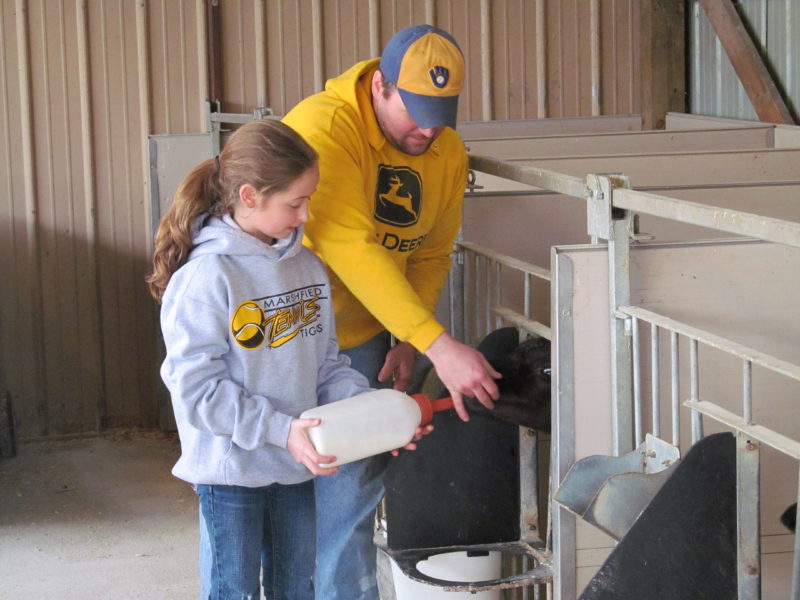
Adult supervision involves careful watching of youth from a close distance. The amount and type of supervision needed depends on the age and abilities of the youth and the task being performed.
Levels of Supervision
- Constant – an adult is always within sight, sound and reach of a youth
- Intermittent – an adult is out of sight and sound for up to 15 minutes
- Periodic – an adult observes the youth at least every 15-30 minutes
Key Points:
- No task is too easy; youth must always be supervised by an adult.
- Children under 10 years need constant supervision.
- Recommended levels of supervision for youth over 10 years depends on the youth’s age and ability, and the task performed.
- Youth performing a new task should be constantly supervised until competent.
- Supervision must be a conscious, purposeful task: adults must think about it and do it consistently.
- Supervision of younger children might involve constant watching. For older children/youth, it might involve pausing adult work every 15 minutes to put “eyes and ears” on working youth.
- When checking on youth, take time to assess their performance. Are they working safely?
- A quick “How’s it going?” or “Do you have any questions?” every so often can go a long way towards keeping youth safe while working.
- Children and youth need more frequent rest periods than adults when working. Provide regular breaks and monitor youth for fatigue.
- Adults should monitor youth for good body mechanics and provide training as needed.
- Adults should praise youth’s safe behaviors and immediately correct unsafe ones.
Supervision Resources
Supervising Youth Working in Agriculture (English)
Supervising Youth Working in Agriculture (French)
Supervising Youth Working in Agriculture (Spanish)
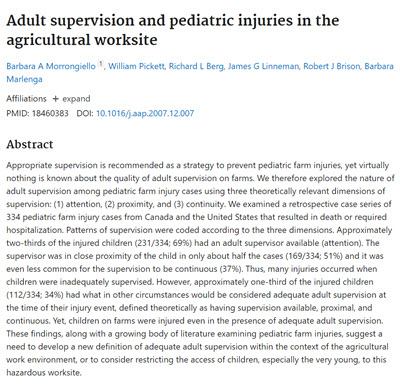
Adult Supervision and Pediatric Injuries in the Agricultural Worksite
Protecting Young Workers in Agriculture – Online Training (English)
Protegiendo a los Jóvenes Trabajadores en la Ag – Entrenamiento en linea (Spanish)