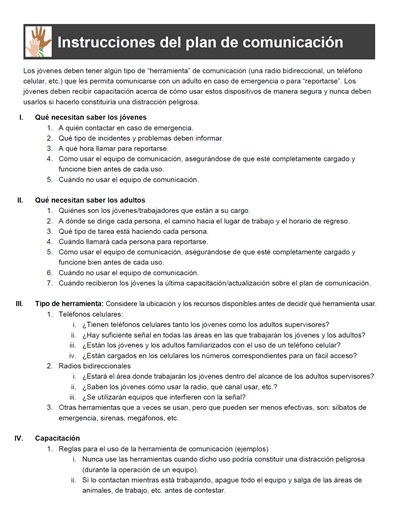
Youth need some type of communication “tool” (two-way radios, cell phone, etc.) that enables them to communicate with an adult in case of emergency and for “checking in.” Youth must be trained to use this equipment under safe conditions and to never use it when it would be a hazardous distraction.
What is a hazardous distraction?
This is something that creates a hazard (danger) by distracting a worker’s attention from their job. Examples would include texting on a cell phone while driving a tractor or talking on a 2-way radio while in a pen with cattle.
What does a communication plan need to include?
A communication plan must include information about the type(s) of communication tools used and what adults and youth need to know (what training is needed), such as:
- Type(s) of communication tools used (e.g. cell phones, walkie-talkies)
- How to use these tools
- When to use the tools
- When not to use the tools
- What to do and who to call in an emergency
- Name(s) of supervisor or other responsible adult
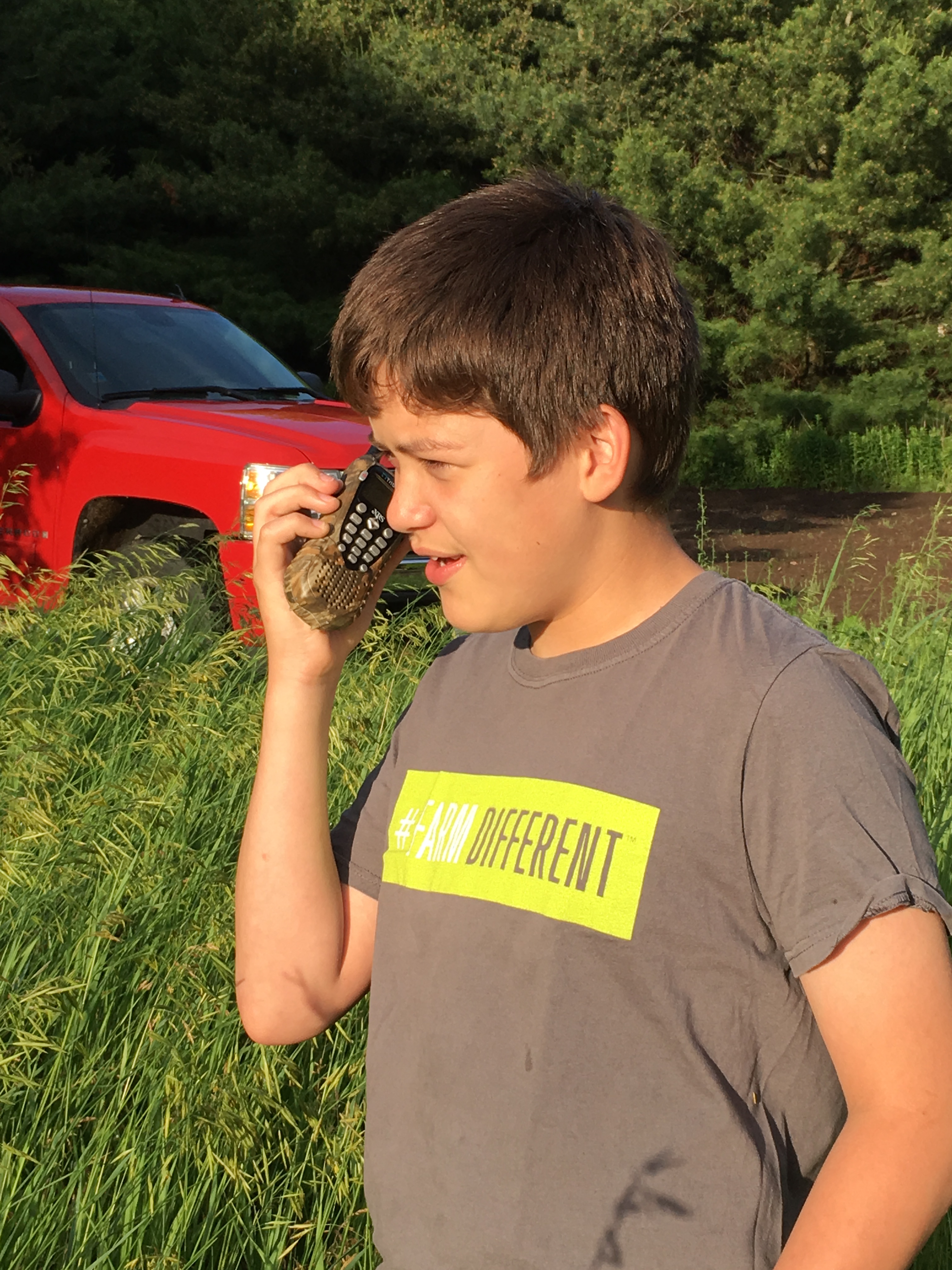
Communication Plan Resources
Communication Plan Instructions and Template (English)
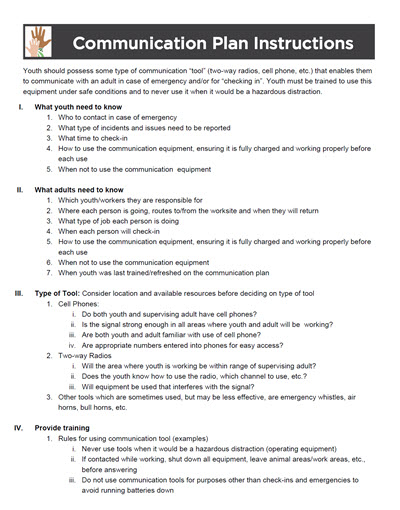
Communication Plan Instructions and Template (French)
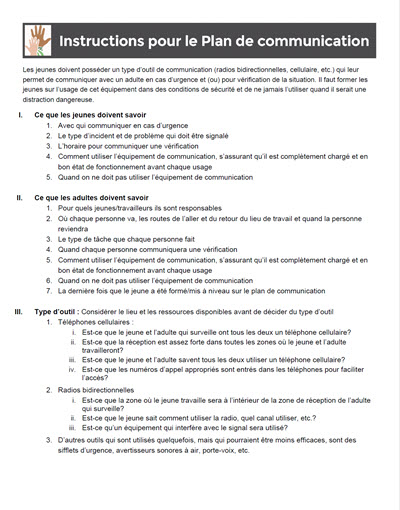
Communication Plan Instructions and Template (Spanish)